Buyers often want a single brand named outright, which is understandable since nobody wants to read a spec sheet before buying a water softener. But “best” depends entirely on hardness level, household size, and iron content, and any list that ignores those three numbers is guessing on the buyer’s behalf. Below are the checks that matter most before recommending a unit, and the specs that separate a good softener from a mediocre one.
This article contains affiliate links. We may earn a commission from qualifying purchases at no extra cost to you. Read our full affiliate disclosure.
Before comparing units, run your own numbers first: our Water Softener Grain Capacity Calculator converts your household size, hardness, and iron level into the exact grain capacity you should be shopping for.
The Valve Is What Actually Matters Most
The control valve is the brain of the softener, and it’s where cheap units cut corners. Fleck valves (the 5600SXT and 7000SXT models specifically) show up in the majority of systems installed and serviced across the industry, because parts are widely available and technicians everywhere know how to work on them. If a softener uses a proprietary, no-name valve, replacement parts and service down the road get a lot harder to find.
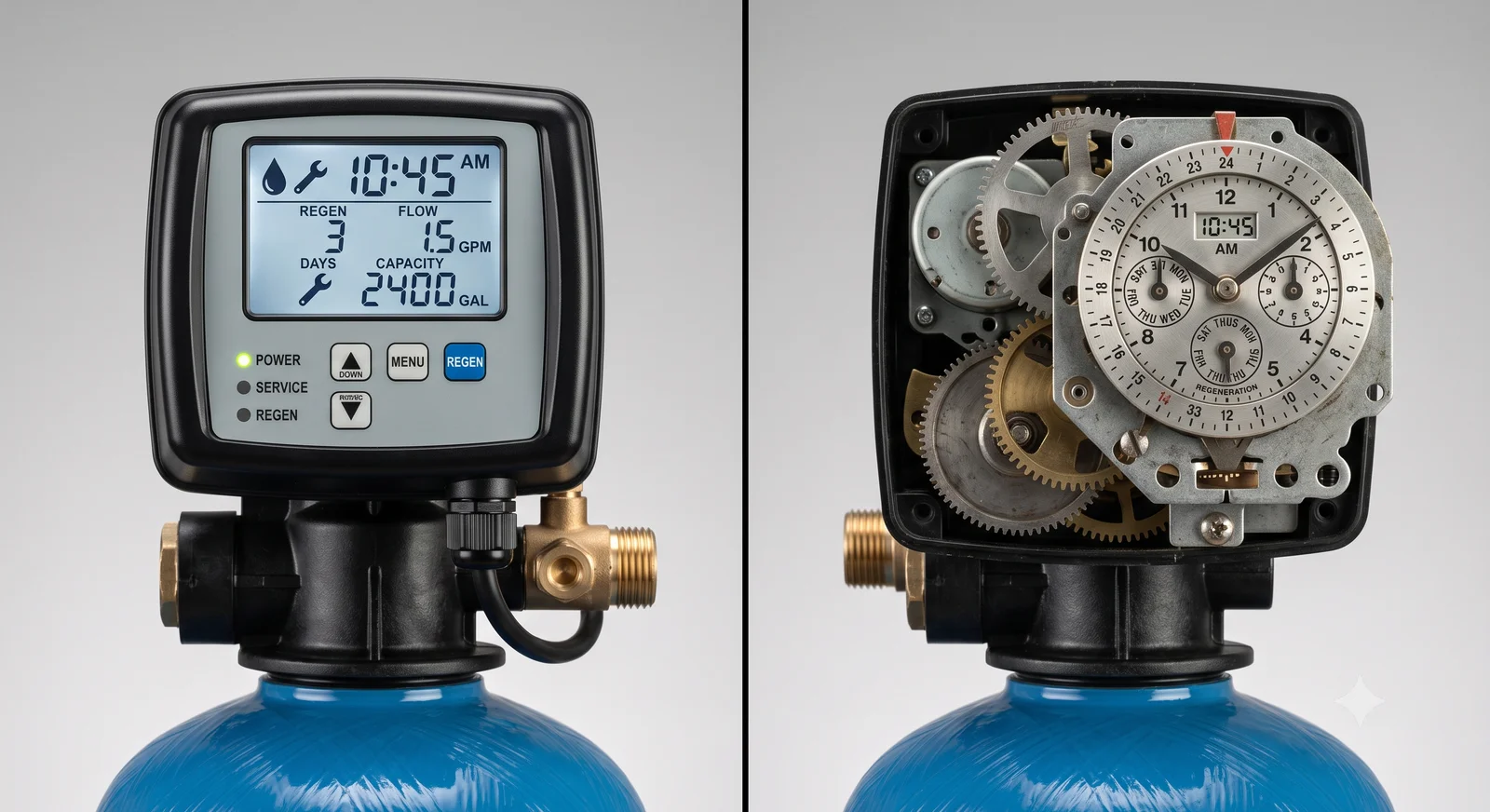
Metered vs. Timer-Based Regeneration
A metered valve regenerates based on actual water usage, tracked by a flow meter. A timer-based valve regenerates on a fixed schedule regardless of how much water you actually used that day. Metered systems save salt and water, usually 20 to 30 percent less than timer models over a year, and they’re the standard recommendation now unless a homeowner specifically wants the cheaper timer option.
Resin Quality: Look for 8% Cross-Linked
Resin beads are rated by cross-link percentage. 8% cross-linked resin (sometimes labeled high-capacity resin) holds up better against chlorine and iron fouling than the cheaper 6% resin used in bargain units. This spec rarely shows up on the front of the box, so check the spec sheet or ask directly before buying.
Certifications That Actually Mean Something
- NSF/ANSI 44: the certification specific to water softeners, covering material safety and softening performance claims.
- WQA Gold Seal: an additional third-party verification some manufacturers pursue on top of NSF certification.
- Avoid units that only claim “lab tested” without naming an actual accredited certifying body. That phrase alone means nothing.
Sizing by Household and Hardness
| Household Size | Hardness (GPG) | Recommended Grain Capacity |
|---|---|---|
| 1 to 2 people | Up to 15 GPG | 24,000 grain |
| 3 to 4 people | Up to 15 GPG | 32,000 to 40,000 grain |
| 3 to 4 people | Over 20 GPG | 48,000 grain |
| 5+ people | Any hardness over 10 GPG | 48,000 to 64,000 grain |
Iron Handling Capacity
Some softeners advertise built-in iron removal up to a few ppm. Treat that as a bonus feature, not your primary iron treatment plan. On any well testing above 2 to 3 ppm iron, a dedicated iron filter ahead of the softener is still standard practice. Relying on a softener’s iron-handling claim alone is one of the fastest ways to void your warranty when the resin fouls early.
What Separates a Good Install From a Bad One
- Bypass valve installed and clearly labeled, so you can isolate the softener for service without shutting off your whole house
- Drain line properly secured with an air gap, not just draped into a floor drain
- Programmed hardness setting that actually matches your water test, not a generic factory default
- Regeneration scheduled for a low-usage time (typically 2 a.m.), so you’re not without soft water mid-cycle
When to Call a Pro vs. DIY
A countertop or single-tap softening unit is fine as a DIY purchase and install. A whole-house system that ties into your main line, needs a drain connection, and has to be programmed to your actual water test results is worth paying an installer for. Getting the hardness setting wrong on the valve’s programming is a common DIY mistake, and it means the unit either regenerates too often (wasting salt and water) or not often enough (letting hard water slip through).
Get your GPG and iron ppm numbers from an actual water test before you buy anything. Every spec on this page only matters once you know those two numbers for your own well.