Nobody is checking your well water but you. City water gets tested constantly by the utility, by law. Your well gets tested exactly as often as you decide to test it. For a lot of homeowners, that means never, until something tastes wrong or a real estate deal forces the issue.
This article contains affiliate links. As an Amazon Associate we earn from qualifying purchases, at no extra cost to you. Read our full affiliate disclosure.
In this guide
- Why This Isn’t Optional
- What to Test For, and How Often
- Your Actual Testing Options
- How to Actually Find a Certified Lab Near You
- How to Take a Sample Without Contaminating It
- What Your Results Actually Mean
- Cost Breakdown, All Options
- What to Do Once You Have Results
- Book Your Test This Week
- Frequently Asked Questions
Why This Isn’t Optional
Bacteria, nitrates, and heavy metals don’t announce themselves. Water can look perfectly clear and still carry coliform bacteria, arsenic, or nitrates at unsafe levels. Clarity tells you nothing about safety.
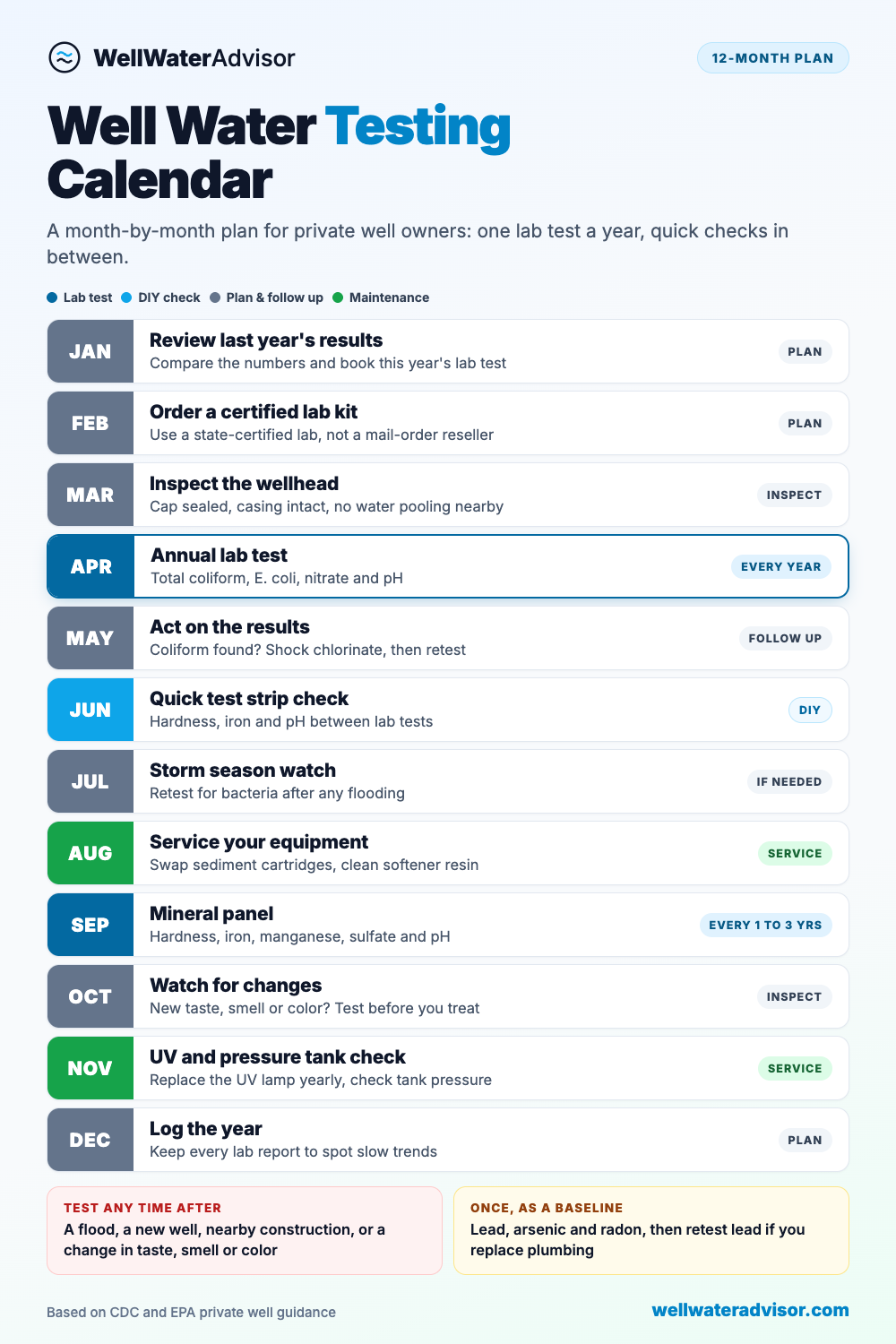
What to Test For, and How Often
| Test | Frequency | Why |
|---|---|---|
| Coliform bacteria | Every year | The single most important recurring test: bacteria levels change independent of everything else |
| Nitrates | Every year | Especially critical if you have an infant in the house, near farmland, or a septic system nearby |
| pH, hardness, iron, manganese, sulfate | Every 1–3 years | These shift slowly but affect equipment sizing and staining |
| Lead | Once, as a baseline (retest if you replace plumbing) | Usually a plumbing issue, not a well issue, but worth ruling out |
| Radon, arsenic | Once, as a baseline | Geographic: depends heavily on your local bedrock |
| Full comprehensive panel | After any flood, new well, nearby construction, or unexplained taste/odor change | Something changed. Find out what before you assume it’s fine |
Data Source: Compiled from U.S. Environmental Protection Agency (EPA) National Primary/Secondary Drinking Water Regulations and USGS Water-Quality Benchmarks.
Your Actual Testing Options
DIY Mail-In Kits
You collect the sample yourself, ship it to a lab, and get results back in a few days to two weeks. Fine for routine bacteria and basic chemistry checks. Cost: $20 to $80 depending on the panel. Just make sure the kit is going to a certified lab, not just a mail-order company repackaging test strips.
County Health Department
Many counties run subsidized well testing, especially for bacteria and nitrates, and it’s often cheaper than a private lab, sometimes $15 to $40. Availability and turnaround time vary a lot by county, and some only test twice a year on a fixed schedule. Call ahead.
Certified Private Lab
Your best option for anything comprehensive (full metals panels, radon, arsenic, VOCs). Turnaround is usually faster than a county program and you can typically add specific contaminants based on your situation. Cost runs $50 to $150 for a standard potability panel, $300 to $600+ for a comprehensive contaminant panel.
One important caution: be careful with “free water testing” offered by a company that also sells filtration equipment. The incentive there is to find a problem, not to give you an accurate read. Get your baseline test from an independent certified lab first, then bring those results to any equipment company for a quote.
How to Actually Find a Certified Lab Near You
- Search the EPA’s Safe Drinking Water Hotline lab list, or your state’s environmental agency website. Most states publish a searchable list of certified drinking water labs.
- Call your county health department directly and ask who they recommend, even if you don’t use their in-house testing program.
- Confirm the lab is certified specifically for drinking water analysis in your state. A lab certified for soil or wastewater testing isn’t the same certification.
How to Take a Sample Without Contaminating It
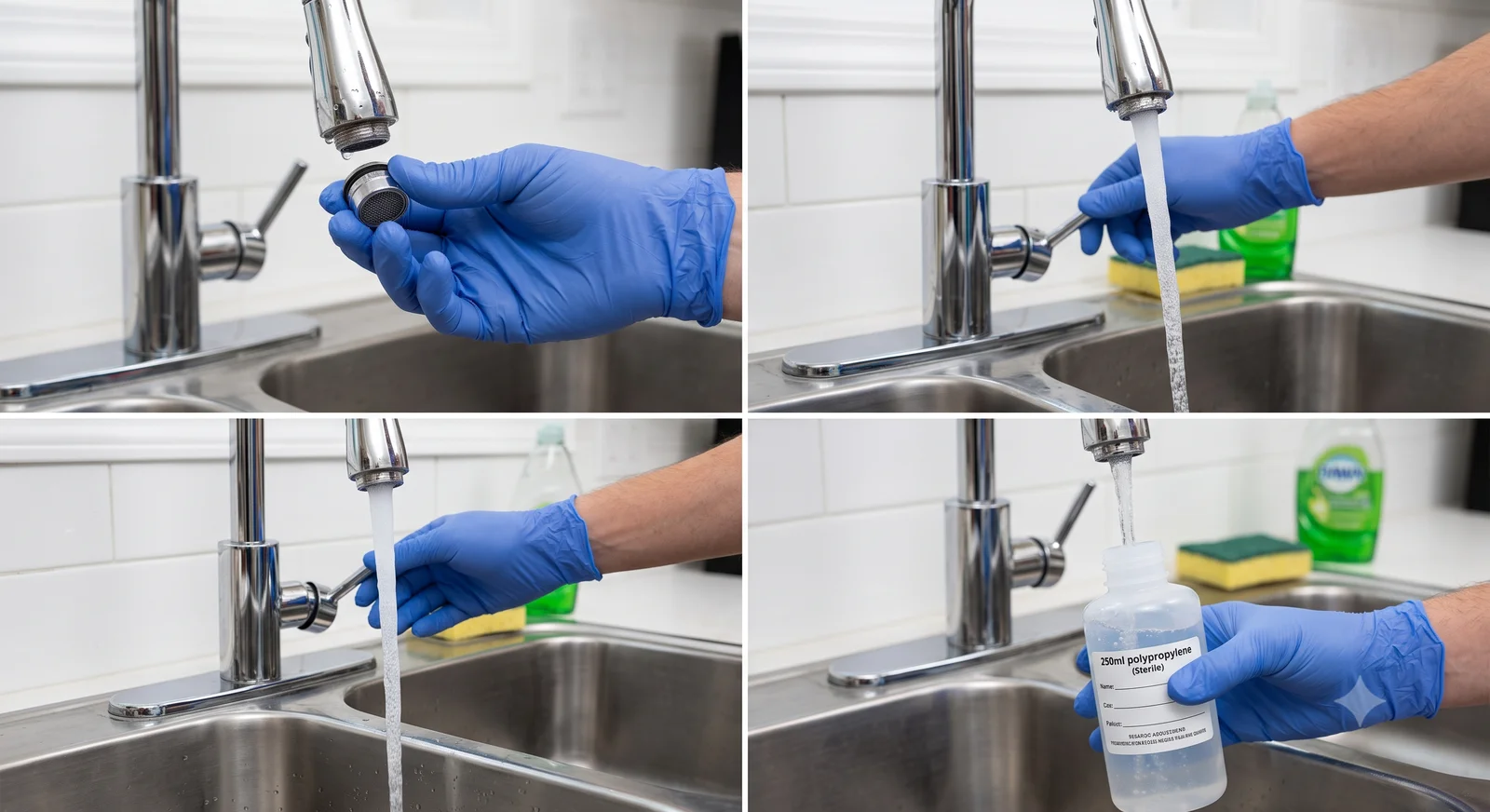
- Pick a cold-water tap close to where your well line enters the house, before any treatment equipment, unless you’re specifically testing post-treatment water.
- Remove any aerator or screen from the faucet. It can trap bacteria unrelated to your actual water supply and skew results.
- Let the water run cold for 5 to 10 minutes to clear stagnant water sitting in the pipe.
- Don’t touch the inside of the sample bottle or its cap with your fingers.
- Fill to the line marked on the bottle, no more, no less. Labs calibrate results to that exact volume.
- Refrigerate or keep the sample on ice immediately and get it to the lab within the window stated on your kit, usually 24 to 48 hours for bacteria testing.
What Your Results Actually Mean
- Any positive coliform result means action now: shock chlorination at minimum, and a retest to confirm it’s cleared.
- Nitrates above 10 mg/L (as nitrogen) is the EPA’s Maximum Contaminant Level (MCL), a legally enforceable health-based limit. Treat this seriously if there’s an infant in the house.
- Iron above 0.3 mg/L or manganese above 0.05 mg/L is a staining and taste issue, not usually a health risk, but it tells you what equipment you actually need.
- pH below 6.5 means corrosive water that’s actively damaging copper plumbing over time.
Cost Breakdown, All Options
| Test Type | Typical Cost |
|---|---|
| Basic bacteria-only test | $15 – $40 |
| Standard potability panel (bacteria + basic chemistry) | $50 – $150 |
| Comprehensive well panel | $150 – $300 |
| Full contaminant panel (metals, VOCs, radon, arsenic) | $300 – $600+ |
What to Do Once You Have Results
Keep every report you get, even the clean ones. They’re your baseline for spotting changes over time. If something comes back elevated, don’t buy equipment based on the contaminant name alone. Bring the actual numbers to whoever sizes your treatment system. A softener for hardness at 12 grains per gallon looks completely different from one sized for 25 grains, and the same goes for every other contaminant on your report.
Book Your Test This Week
If it’s been more than a year since your last bacteria test, call your county health department or a certified lab today. It’s the one number every other decision on this site, and every equipment quote you get, depends on.