Iron is the single most common issue identified in well water testing, and it’s rarely a health concern. That doesn’t make it any less annoying to live with. Orange stains on everything the water touches, a metallic taste, laundry that comes out discolored. Here’s how to actually confirm it’s iron, understand what your specific numbers mean, and know what removal actually involves.
This article contains affiliate links. We may earn a commission from qualifying purchases at no extra cost to you. Read our full affiliate disclosure.
Quick Hardware Recommendation
Match the fix to your test results first. Buttons open current options on Amazon.
Unsure of your contaminant levels? Run our Free Water Calculator
In this guide
The Signs That Point to Iron
- Orange or reddish-brown staining on sinks, tubs, and toilets, especially where water sits or drips
- A metallic taste, sometimes described as tasting like blood or pennies
- Rust-colored spots on white laundry after washing
- Water that runs clear from the tap but develops a rusty tint after sitting in a glass for a few minutes (a sign of dissolved, clear-water iron oxidizing on contact with air)
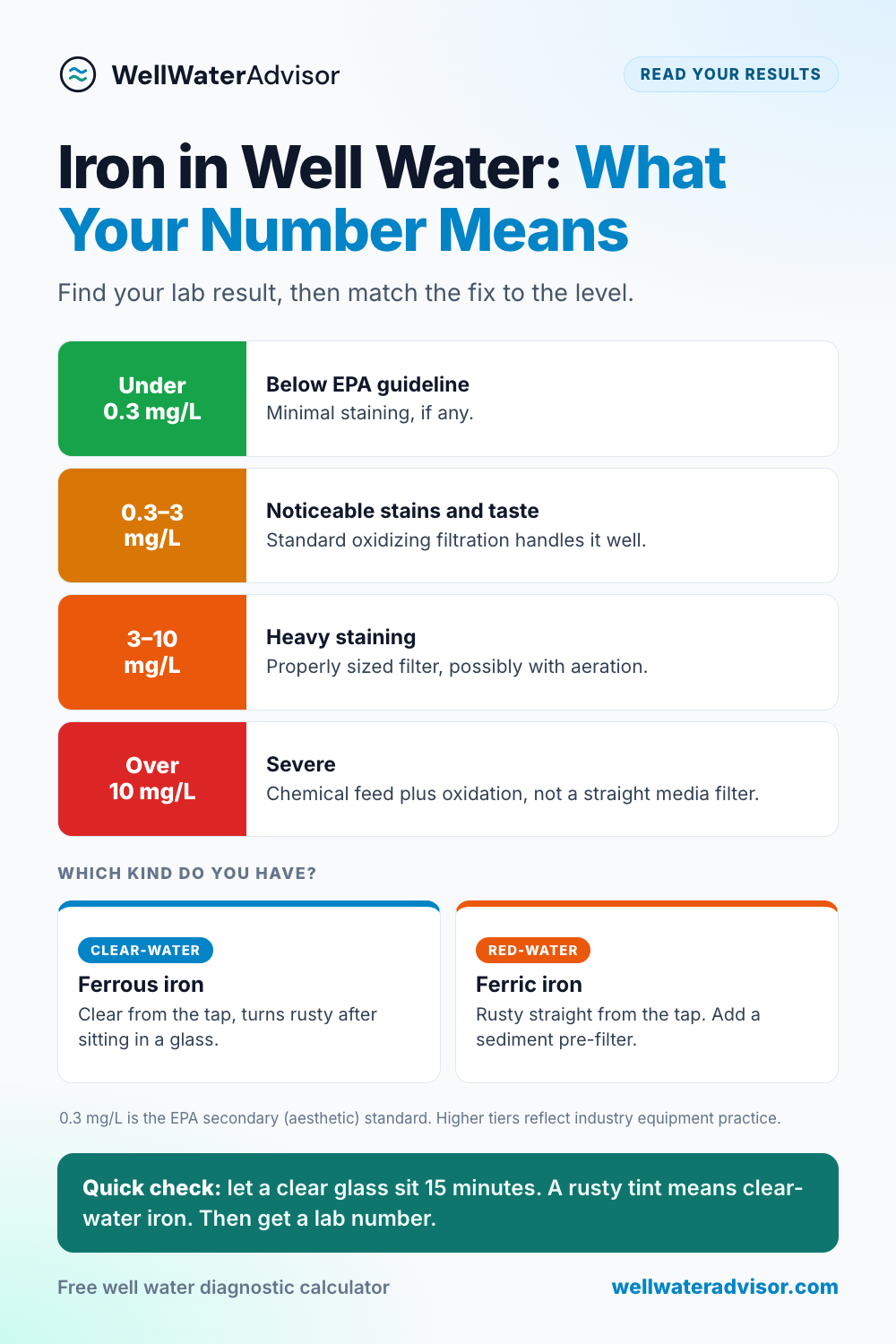
Clear-Water Iron vs. Red-Water Iron
Clear-water (ferrous) iron is dissolved and invisible until it oxidizes after contact with air, which is why a glass of water can look totally clean at first and develop a rusty tint sitting on your counter. Red-water (ferric) iron is already oxidized and visibly rust-colored straight from the tap. The distinction matters for treatment: red-water iron usually needs a sediment stage ahead of your main iron filter to catch the particles, since it’s no longer in dissolved form.
What Your Test Number Actually Means
| Iron Level (ppm) | What to Expect |
|---|---|
| Under 0.3 mg/L | Below the EPA’s aesthetic guideline, minimal staining if any |
| 0.3 to 3 mg/L | Noticeable staining and taste, standard oxidizing filtration handles this well |
| 3 to 10 mg/L | Heavy staining, needs a properly sized filter and possibly aeration |
| Over 10 mg/L | Severe, often needs a chemical feed and oxidation system rather than a straight media filter |
Data Source: The 0.3 mg/L threshold is the U.S. Environmental Protection Agency (EPA) Secondary Drinking Water Regulation for iron. The concentration tiers above that point reflect general water treatment industry practice for equipment selection, not additional EPA or USGS regulatory thresholds.
The EPA’s 0.3 ppm guideline for iron is a secondary (aesthetic) standard, not a health-based limit. Iron at typical well concentrations isn’t considered a health hazard; it’s a nuisance contaminant. That said, very high concentrations can indicate other groundwater conditions worth a fuller test panel.
Don’t Confuse This With Manganese or Tannins
Manganese staining tends to run darker, closer to black or brown-black, and often shows up alongside iron since both minerals form under similar groundwater conditions. Tannin staining runs more yellow-brown and shows up strongest in standing water rather than on fixtures. A lab test distinguishes all three definitively. Guessing by color alone is a common way homeowners end up buying the wrong filter.
Removal Options, Briefly
Air injection oxidation and manganese greensand are the two media types installed most often for iron in the 0.3 to 10 ppm range, and a chemical feed system takes over above that. Our guide to the best iron filter for well water covers the full sizing math, media comparison, and cost breakdown for each, since that decision deserves more detail than a quick summary here.
When to Call a Pro vs. DIY
Confirming iron as your issue just takes a water test, no professional visit required for that step. Sizing and installing the actual removal system is where hiring a licensed installer matters, since an undersized filter for your specific ppm level will pass iron through the moment your household hits peak water demand, and you’ll be back to square one within weeks.
Fill a clear glass with tap water and let it sit for 15 minutes. If it develops a rusty tint, that confirms clear-water iron, and it’s time to get an actual ppm number from a lab test.