Emergency calls for a dead well pump or a fouled softener consistently trace back to the same root cause: nobody was checking anything until something stopped working. A well system isn’t “set it and forget it.” It’s a handful of small checks, done on a schedule, that turn thousand-dollar emergencies into forty-dollar non-events.
This article contains affiliate links. As an Amazon Associate we earn from qualifying purchases, at no extra cost to you. Read our full affiliate disclosure.
In this guide
Why Neglected Systems Fail Early
A softener that never gets its salt checked stops regenerating properly and hardness sneaks back into your pipes for months before anyone notices the film on their shower door. A pressure tank with a blown bladder makes your pump short-cycle, which is the single fastest way to burn one out early. None of this announces itself loudly. It just quietly costs you money until it doesn’t.
Monthly Checklist
- Check softener salt level. Refill if it’s below one-third full.
- Look at your pressure gauge. Normal range is usually 40–60 PSI; anything bouncing or sitting outside that needs attention.
- Listen for your pump cycling on and off rapidly with no fixtures running. That’s short-cycling, and it’s more often a pressure tank problem than a pump problem.
- Do a quick smell and taste check. Any new sulfur, metallic, or musty taste means something changed and it’s worth testing.
Every 3–6 Months
- Replace sediment pre-filter cartridges. Don’t wait until flow noticeably drops. By then it’s already been restricting your whole system for weeks.
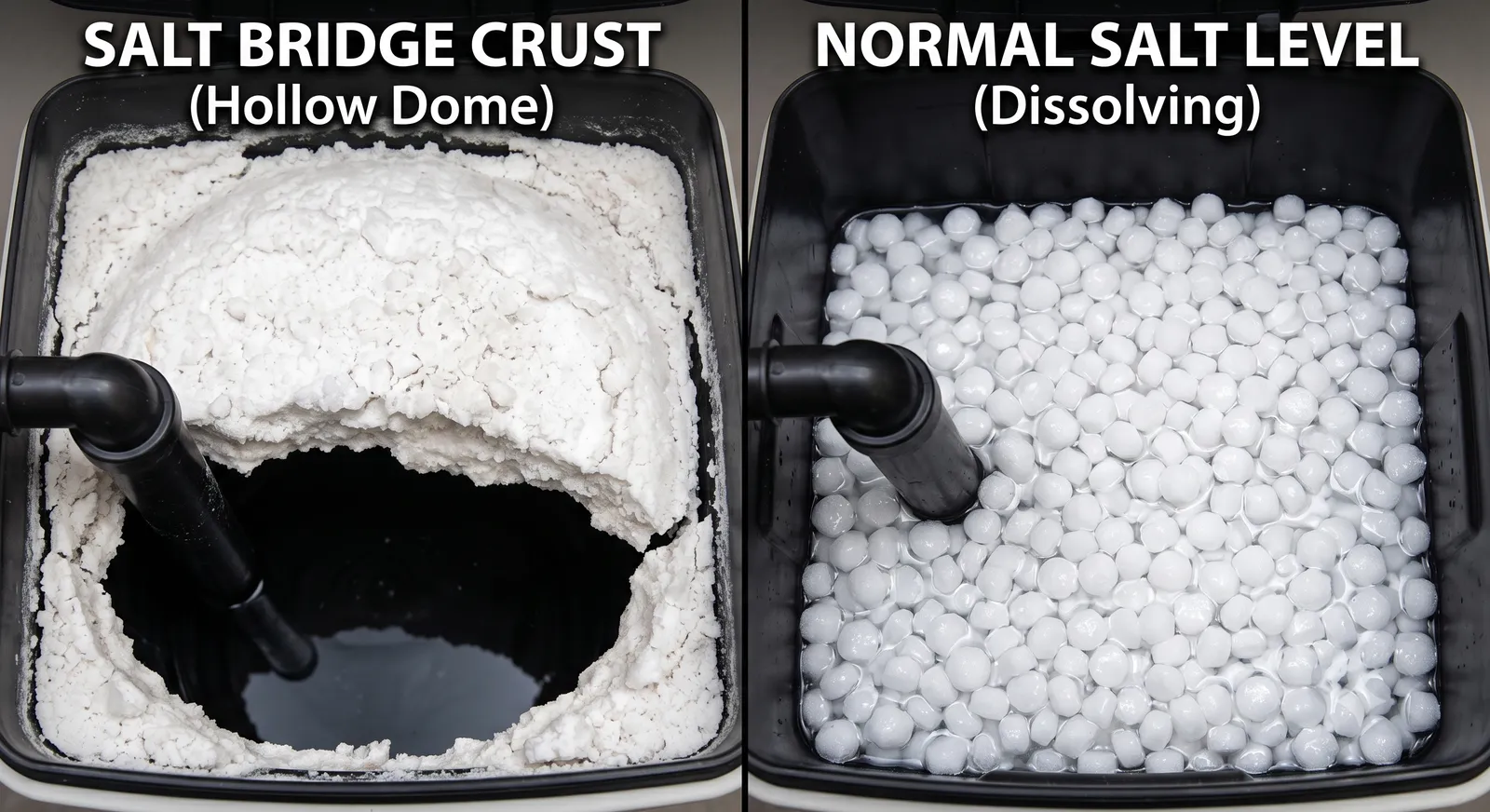
- Clean the softener brine tank. Salt bridges (a hard crust forming above the water line) stop regeneration silently, so break these up even if the tank “looks fine” from the top.
- Check the pressure tank’s air charge with a tire gauge when the tank is empty. It should read about 2 PSI below your pump’s cut-in pressure.
- Inspect visible plumbing connections near your treatment equipment for slow leaks or corrosion at fittings.
Annual Checklist
- Get a full water test: bacteria and full chemistry, not just a strip test. This is the single most important thing on this entire list.
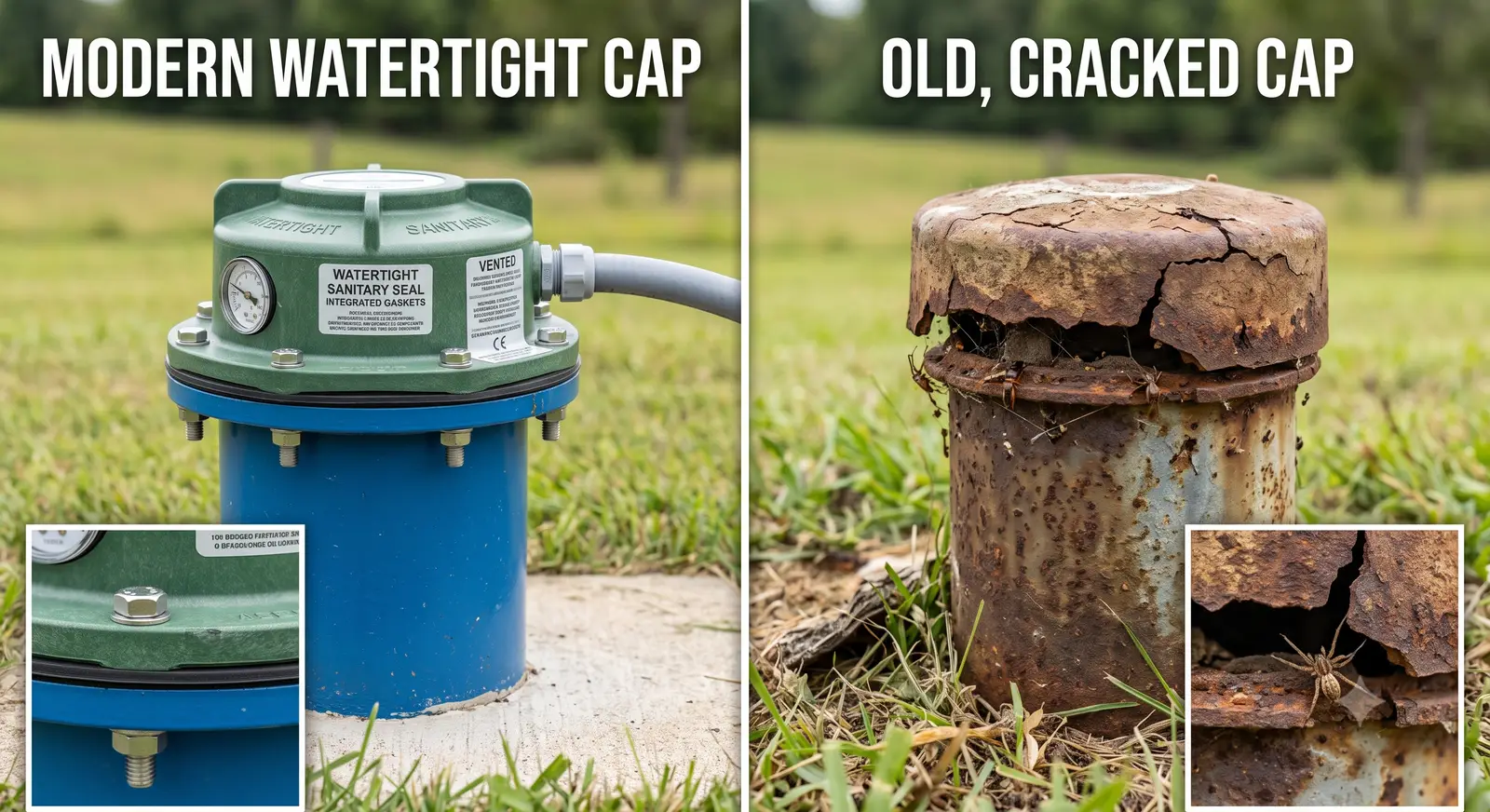
- Inspect the well cap and casing above ground for cracks, gaps, or a cap that’s no longer sealed tight. Insects and surface water getting into your casing is how bacteria problems start.
- Replace your UV bulb regardless of whether it still lights up. UV output degrades well before the bulb visibly fails.
- Flush your water heater to clear sediment that settles even with a working pre-filter upstream.
- Have your pump’s electrical connections and pressure switch checked, especially if your system is more than 8 years old.
Long-Term: Every 3–15 Years
| Component | Typical Lifespan | What Shortens It |
|---|---|---|
| Submersible well pump | 8–15 years | Short-cycling from a failing pressure tank, sand intrusion, running dry |
| Pressure tank | 10–15 years | Never checking the air charge, a slow bladder leak going unnoticed |
| Softener resin bed | 10–15 years (5–7 if fouled by iron) | Installing a softener before an iron filter |
| UV bulb | 1 year | N/A (replace on schedule regardless of appearance) |
| Iron/oxidizing filter media | 3–5 years | High iron load beyond the media’s rated capacity |
What Staying on Top of This Actually Costs You
| Maintenance Approach | Annual Cost | What You’re Trading Off |
|---|---|---|
| DIY (filters, salt, visual checks) | $150 – $350/year | Your time, and you need to actually stick to the schedule |
| Annual water test only | $50 – $150/year | Catches chemistry changes but not mechanical wear |
| Professional service plan (1–2 visits/year) | $200 – $500/year | Costs more up front, catches pump and tank issues before failure |
Compare any of those numbers to an emergency well pump replacement ($1,800 to $4,500 depending on well depth), and the math on staying current isn’t close.
Signs You’re Already Behind
- Water pressure that fluctuates instead of holding steady
- Soap that won’t lather like it used to, or new scale on fixtures
- A softener running through salt much faster than usual
- Any taste or odor that wasn’t there a few months ago
- Your pump cycling on and off with no water running anywhere in the house
Any one of these on its own isn’t an emergency. All of them mean it’s time to stop guessing and get a professional look at the whole system, not just the symptom that’s bothering you.
Put This on Your Calendar Today
Pick one day a month, right now, and set a recurring reminder for the softener salt and pressure gauge check. That single habit prevents more emergency calls than any piece of equipment you could buy.