Iron is the most common well water contaminant homeowners report. Orange staining in the tub, rust-colored laundry, water that tastes metallic. Before buying anything, the type of iron involved needs to be identified, because the wrong media for a specific iron problem will foul within months and leave the household right back where it started.
This article contains affiliate links. As an Amazon Associate we earn from qualifying purchases, at no extra cost to you. Read our full affiliate disclosure.
In this guide
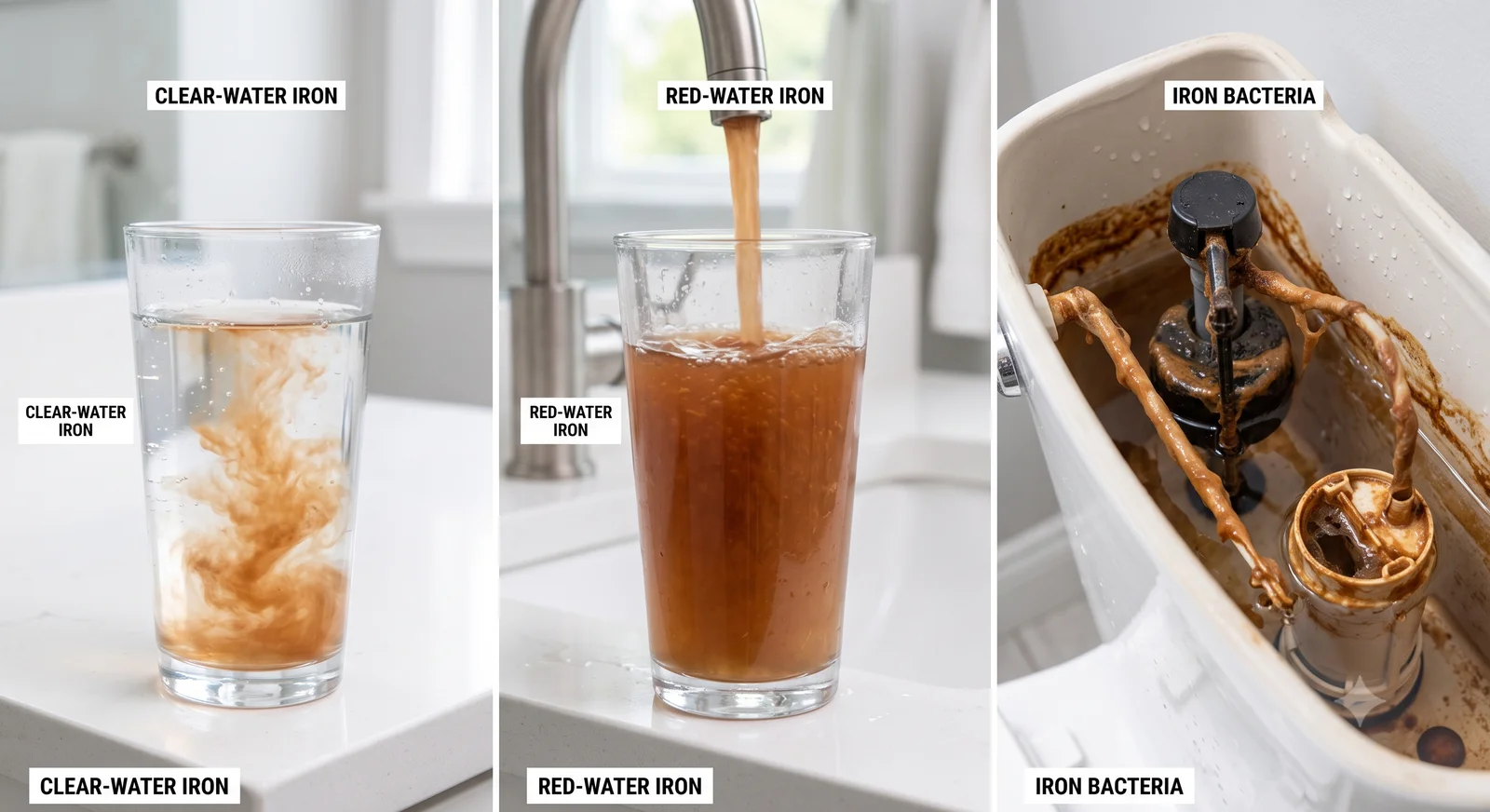
Not All Iron Is the Same Iron
- Clear-water (ferrous) iron: dissolved in the water, invisible until it hits air and oxidizes into rust color. This is the most common type and the easiest to treat.
- Red-water (ferric) iron: already oxidized, visibly rust-colored right out of the tap. Usually needs a sediment stage ahead of the iron filter to catch particles.
- Iron bacteria: a slimy, reddish-brown biological growth, not a mineral problem at all. This needs shock chlorination as part of the treatment, not just a filter.
Once you know which type you’re dealing with, most clear-water iron problems are solved with a dedicated iron filter system sized to your test results, which is the core of any water filtration system for well water with iron.
The Three Media Types That Actually Work
Air Injection (AIO) Systems
An air injection system pulls air into a chamber above the media bed, oxidizing dissolved iron and manganese before it passes through a catalytic media (usually Filox or a similar product) that traps it. No chemicals needed, and it handles moderate iron levels, typically up to 7 to 10 ppm, well. This is the standard recommendation for straightforward clear-water iron problems.
Manganese Greensand
An older but still reliable media that requires periodic regeneration with potassium permanganate to stay active. It handles both iron and manganese well and holds up at slightly higher concentrations than standard AIO media, but it needs more attention over its lifespan than a straight air-injection system.
Chemical Feed with Oxidizer
For high iron levels above 10 ppm, or any well with iron bacteria present, a chlorine or hydrogen peroxide feed pump ahead of a filter tank is usually the only approach that actually holds up long-term. This is more equipment and more maintenance than a straight media filter, but it’s the standard approach once iron gets into double digits.
Matching Media to Your Iron Level
| Iron Level | Recommended Approach | Installed Cost |
|---|---|---|
| 0.3 to 3 mg/L (clear-water) | Air injection oxidizing filter | $1,500 to $2,600 |
| 3 to 7 mg/L | Air injection or manganese greensand | $1,800 to $3,200 |
| 7 to 10 mg/L | Manganese greensand or chemical feed | $2,200 to $3,800 |
| Over 10 mg/L, or iron bacteria present | Chemical feed with retention tank and filter | $2,800 to $4,500 |
Data Source: The 0.3 mg/L starting threshold is the U.S. Environmental Protection Agency (EPA) Secondary Drinking Water Regulation for iron. The equipment and cost tiers above that point reflect general water treatment industry practice, not additional EPA or USGS regulatory thresholds.
Flow Rate: The Spec Everyone Skips
An iron filter has to handle your home’s peak flow rate, typically 8 to 12 gallons per minute for an average house running two fixtures at once, without a major pressure drop. A filter undersized for flow rate will treat water fine at low demand and let iron slip through the moment someone runs a shower and the washing machine together. Ask for the unit’s rated service flow, not just its tank size, before buying.
Maintenance Reality Check
Air injection and greensand media typically last 3 to 5 years before needing replacement, sooner if the iron load consistently runs at the high end of the media’s rating. Chemical feed systems need the feed solution refilled every few weeks to a couple months, depending on tank size and usage. Whatever you buy, budget for this ongoing cost, not just the upfront installation price.
When to Call a Pro vs. DIY
Swapping a pre-filter cartridge or topping off a chemical feed tank is fine to handle yourself once it’s installed. Choosing between air injection, greensand, and chemical feed, and sizing the unit to your actual iron ppm and flow rate, is exactly the kind of decision that goes wrong without a real water test in hand. Get that test done first, then bring the numbers to whoever you’re getting quotes from. This is exactly the piece that trips people up when they try to assemble a complete well treatment system themselves.