Manganese gets treated as iron’s less important cousin a lot of the time, and that’s a mistake. It stains darker, it’s harder to filter out, and unlike iron, there’s an actual health guideline attached to it that matters if you have young kids in the house. Here’s what actually needs checking when manganese shows up on a test.
In this guide
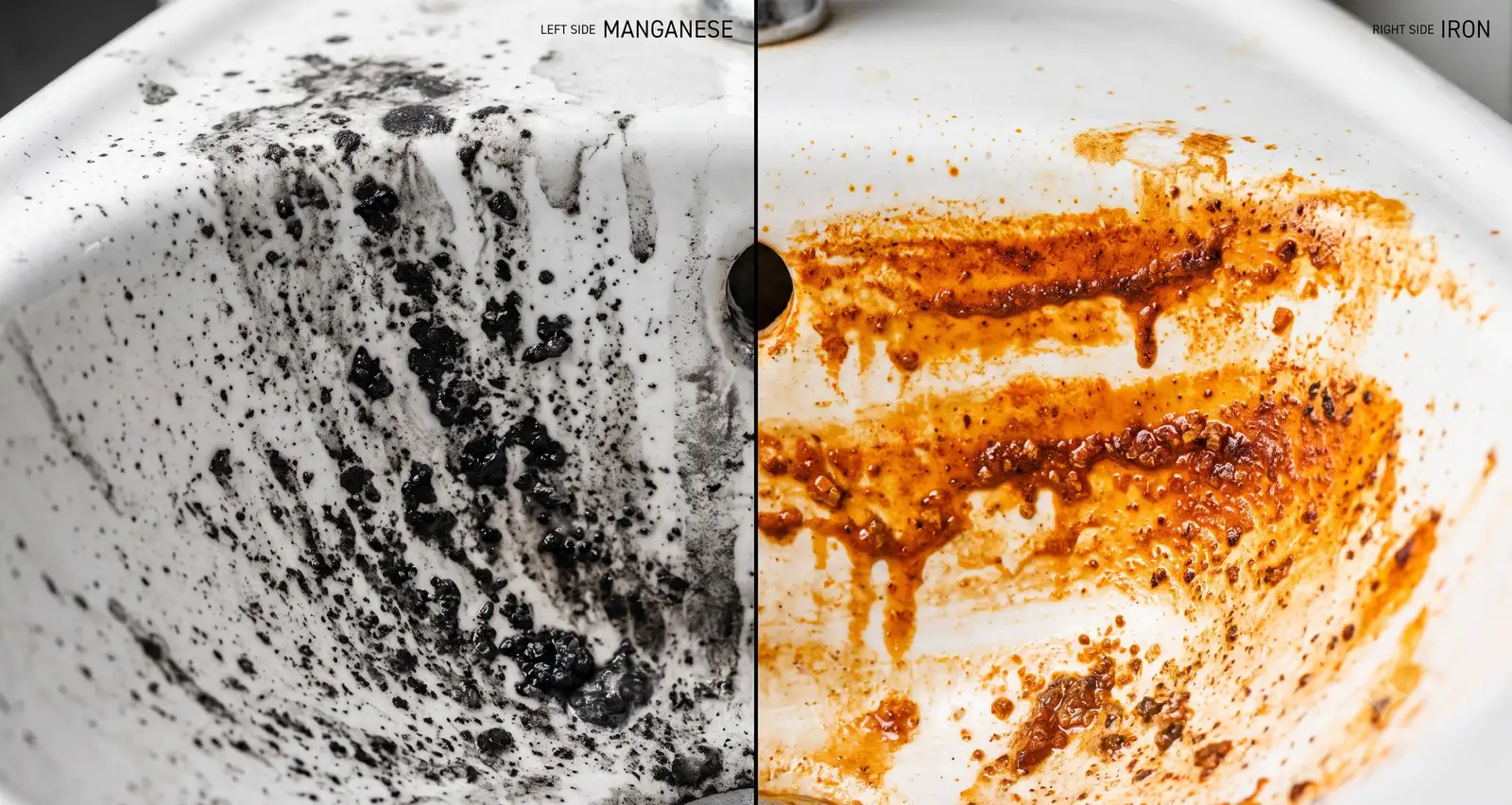
How to Recognize It
- Black or dark brown-black staining on fixtures, noticeably darker than typical rust-orange iron staining
- A black residue that builds up in toilet tanks and on faucet aerators
- A slightly bitter or metallic taste at higher concentrations
- Dark spots on laundry, particularly noticeable on light-colored fabrics
The Health Guideline Worth Knowing
The EPA has both a lifetime health advisory level for manganese (0.3 mg/L, the more protective number relevant to everyday use) and a separate, higher short-term ceiling specifically for infants (1 mg/L that should never be exceeded even briefly). For mixing infant formula with well water, pediatric and public health guidance sources generally recommend staying below the lower 0.3 mg/L lifetime number, not treating the 1 mg/L short-term ceiling as the target. If you have an infant in the house and your well tests above the low end of that range, don’t wait on treatment. This is one of the few “aesthetic” contaminants where treatment sooner rather than later is recommended, specifically because of the infant exposure question.
Why It’s Harder to Remove Than Iron
Manganese requires a higher oxidation potential to convert into a filterable form than iron does. A media or system that handles iron just fine can underperform on manganese specifically, which is why manganese should always be tested separately rather than assumed based on iron results alone. Manganese greensand media, which regenerates using potassium permanganate, tends to hold up better on manganese specifically than straight air injection systems do, especially once concentrations climb past 1 ppm.
| Manganese Level | Recommended Approach |
|---|---|
| Under 0.05 mg/L | Below the EPA’s aesthetic guideline, treatment optional |
| 0.05 to 1 mg/L | Air injection oxidation or manganese greensand |
| Over 1 mg/L | Manganese greensand or chemical feed with oxidizer, sized specifically for manganese |
Data Source: The 0.05 mg/L threshold is the U.S. Environmental Protection Agency (EPA) Secondary Drinking Water Regulation for manganese; the 0.3 mg/L and 1 mg/L figures above are drawn from the EPA‘s 2004 Health Advisory for Manganese. The equipment-selection tiers in this table reflect general water treatment industry practice, not additional regulatory thresholds.
Manganese and Iron Often Travel Together
Wells with elevated iron frequently show elevated manganese too, since both form under similar low-oxygen groundwater conditions. If your test shows both, the filter media needs to be rated for whichever contaminant is present at the higher relative concentration against its treatment capacity, not just sized for the bigger of the two raw numbers.
When to Call a Pro vs. DIY
Testing for manganese is a simple add-on to any standard well water panel, and you can request it yourself from any certified lab without professional help. Choosing and sizing the actual removal media is where a professional’s experience pays off, since manganese is one of the easier contaminants to under-treat with the wrong media choice, leaving you with the same staining problem after spending real money on equipment.
If there’s an infant in your house and you’ve never specifically tested for manganese, get that test done this week rather than assuming your iron filter already has it covered.