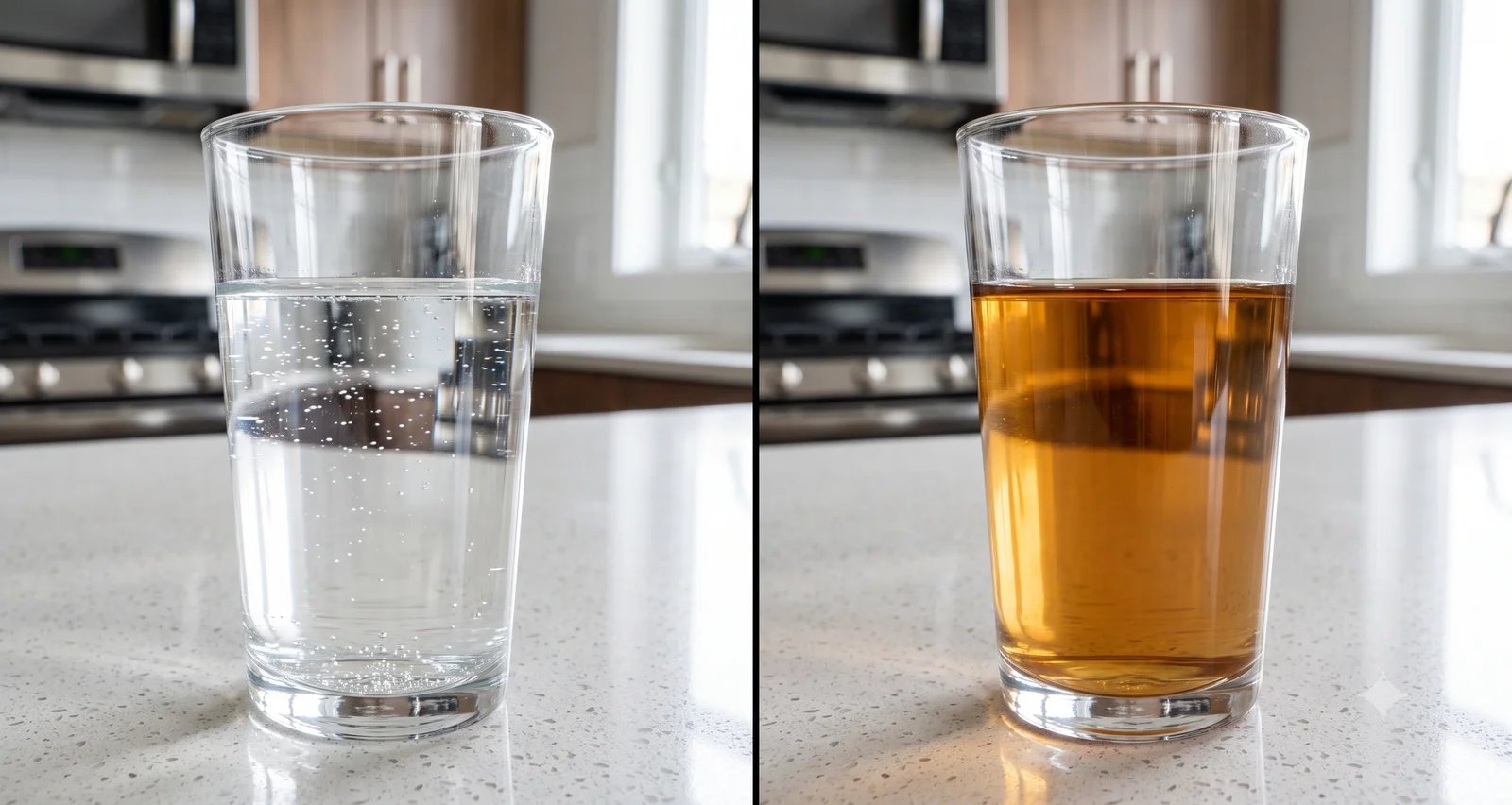
Tea-colored well water throws people off more than almost any other issue in this category. It looks alarming, but it’s usually one of the more harmless things on this list from a health standpoint. That doesn’t mean it’s fine to ignore, since it stains everything it touches and it’s genuinely annoying to live with.
This article contains affiliate links. We may earn a commission from qualifying purchases at no extra cost to you. Read our full affiliate disclosure.
What Tannins Actually Are
Tannins are organic compounds that leach out of decaying vegetation, leaves, and peat as groundwater filters through soil. Wells near wetlands, bogs, or areas with heavy leaf litter are especially prone to this. The water isn’t dangerous in most cases, but it stains laundry, sinks, and tubs a yellow-brown color, and it often carries a mild earthy or tea-like taste.
Don’t Confuse This With Iron
Tannin staining and iron staining look similar enough that homeowners commonly buy an iron filter and see zero improvement. Iron staining tends to be more orange-rust colored and shows up heaviest on fixtures. Tannin staining runs more yellow-brown and shows up strongly in standing water, like a full bathtub or a glass left out. A real water test distinguishes between the two definitively; guessing by color alone gets it wrong often enough that relying on it isn’t recommended.
How Tannin Filters Actually Work
Most tannin filters use an anion exchange resin, similar in concept to a water softener but using a different resin type that specifically targets organic tannin molecules instead of hardness minerals. The resin needs periodic regeneration with a salt brine solution, just like a softener. Some systems combine tannin removal with softening in a single tank if you’re dealing with both problems, which is common since tannin-heavy wells often run moderately hard too.
What It Costs
| System Type | Installed Cost |
|---|---|
| Standalone tannin filter | $1,000 to $2,000 |
| Combined tannin and softener unit | $1,600 to $2,800 |
| Brine salt (ongoing) | $6 to $10 per 40 lb bag |
| Resin bed replacement (every 8 to 12 years) | $350 to $700 |
Why Pre-Filtration Still Matters Here
A sediment pre-filter ahead of a tannin system extends the resin’s working life significantly. Sediment particles physically clog the resin bed the same way they foul a softener’s resin, so skipping this step is a fast way to cut your system’s lifespan short and end up replacing resin years earlier than expected. Getting the sequence right matters as much here as it does anywhere else in treating well water.
Signs Your Tannin Filter Needs Attention
- Color returning gradually between regeneration cycles, meaning the resin’s capacity is shrinking
- A noticeably shorter interval between when water runs clean and when staining reappears
- Salt usage in the brine tank dropping off, suggesting the regeneration cycle isn’t triggering properly
When to Call a Pro vs. DIY
Adding brine salt and monitoring the system once it’s running is a simple DIY task, no different from maintaining a softener. Sizing the resin bed correctly for your tannin level, and deciding whether you need a standalone unit or a combined tannin-and-softener system, is worth getting a professional opinion on, especially since tannin concentration varies more by season (heavier after spring runoff, for example) than most other well contaminants.
If your water is running tea-colored, get a real lab test before assuming it’s tannins. Confirming that first saves you from buying the wrong filter entirely.