The most common question homeowners raise up front is what this is actually going to cost. Fair question, and one most companies dodge until they’re standing in your basement. Here’s every line item that goes into a well water filtration quote, broken down so you can tell a fair price from a padded one.
In this guide
What Drives Your Price More Than Anything Else
Contaminant type and concentration matter more than your house size, your well depth, or almost anything else. A house with mild hardness and nothing else pays a fraction of what a house with high iron, sulfur, and low pH pays, regardless of square footage. Get your water tested before you get quotes. Every number below assumes you already know what you’re treating for. Every component listed here is part of a larger whole house well water filtration system; see how they fit together if you want the full picture first.
Equipment Costs, Installed, By Component
| Component | Installed Cost Range |
|---|---|
| Sediment pre-filter | $150 to $450 |
| Iron/manganese oxidizing filter | $1,500 to $3,200 |
| Aeration system | $1,500 to $3,500 |
| Water softener | $1,200 to $2,800 |
| Acid neutralizer | $1,000 to $2,200 |
| Carbon filter (whole-house) | $600 to $1,500 |
| UV disinfection | $500 to $1,200 |
| Under-sink RO | $250 to $700 |
| Whole-house RO (with pre-treatment) | $5,500 to $12,500 |
| Chemical feed pump and retention tank | $800 to $2,000 |
Labor: What You’re Actually Paying For
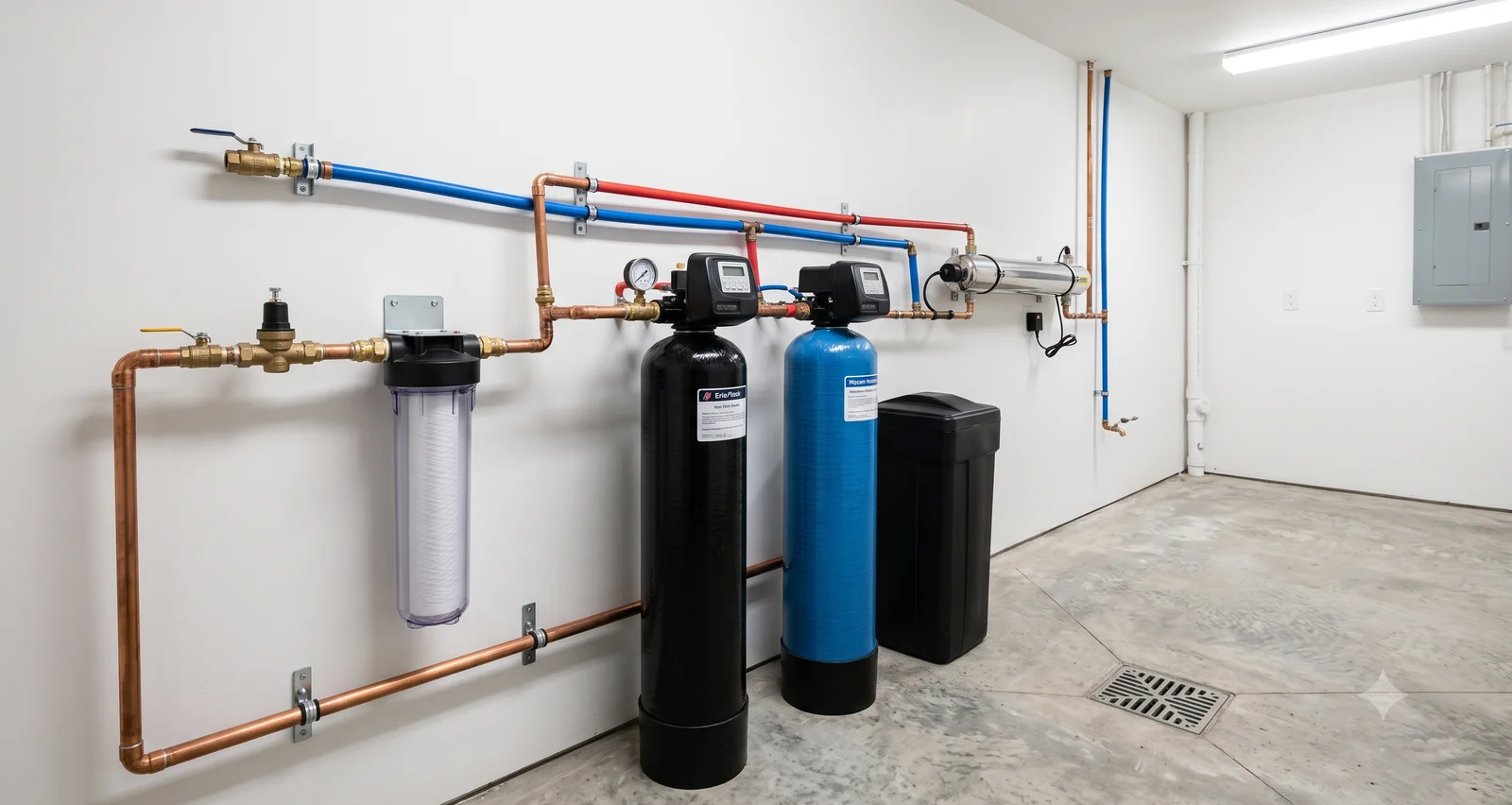
Labor typically runs 30 to 45 percent of a total quote on a multi-component system. That covers running new plumbing to accommodate each unit, tying in drain lines for backwash and regeneration cycles, electrical work for UV systems and feed pumps, and testing the whole system once it’s connected. A single-component install (just a softener, for example) leans closer to 25 percent labor. A full treatment train with four or five components climbs toward that 45 percent mark because of how much plumbing and coordination is involved between units.
Site Conditions That Change Your Price
- No existing floor drain nearby. Adding a drain line run can add $300 to $800 depending on distance and whether concrete needs to be cut.
- No accessible power outlet. UV systems and feed pumps need power; running a new circuit adds $150 to $400.
- Tight or finished basement space. Working around finished walls or low clearance slows installation and adds labor hours.
- Older or undersized main line plumbing. Some older homes need line upsizing to handle a full treatment train’s flow requirements without a pressure drop.
Ongoing Costs Most Quotes Leave Out
| Item | Annual Cost |
|---|---|
| Softener salt | $70 to $150 |
| Sediment filter cartridges (2 to 4 changes/year) | $40 to $100 |
| UV bulb replacement | $80 to $150 |
| Media replacement (iron filter, amortized over its lifespan) | $100 to $250/year equivalent |
| Annual water retest | $50 to $150 |
Add these up and a full system typically runs $340 to $800 a year to maintain properly, on top of the installed cost. Any quote that doesn’t mention ongoing costs at all is one you should ask more questions about.
Financing and Red Flags to Watch For
Most water treatment companies offer financing, typically 12 to 60 month terms. Run the math on total cost including interest before signing; a 0% promotional rate is genuinely worth it, a 15%+ rate often isn’t once you compare it to just paying cash or using a low-interest personal loan.
Watch for a few specific red flags: a quote that bundles a full system for a suspiciously flat price without ever asking for a water test, high-pressure “today only” discount pitches, and rental agreements that look cheap monthly but cost far more than buying outright over 5 years. Ask for an itemized quote broken down by component, not a single bundled number.
When to Call a Pro vs. DIY
DIY installation on a single component (a sediment filter or an under-sink RO unit) can save you most of that labor percentage if you’re comfortable with basic plumbing. A full multi-component system with drain, electrical, and bypass valve work is where professional installation earns its cost, both for correct function and for keeping any manufacturer warranty intact.
Get two or three itemized quotes before committing to anything. The spread between the highest and lowest quote for the same equipment is often bigger than people expect, and an itemized breakdown is the only way to actually compare them.