A single diagnostic check usually settles this before any hardware gets replaced: does the cold water smell too, or just the hot? If it’s only the hot tap, this is almost never a well problem. It’s what’s happening inside your water heater tank.
This article contains affiliate links. As an Amazon Associate we earn from qualifying purchases, at no extra cost to you. Read our full affiliate disclosure.
In this guide
The One Question That Diagnoses This
| Symptom | Likely Cause |
|---|---|
| Only hot water smells, cold water is fine | Water heater anode rod reacting with bacteria in the tank |
| Both hot and cold water smell | Hydrogen sulfide gas from your well or aquifer itself |
If you’re in the second row, that’s a whole-well issue with a different fix, covered separately. This post is about the hot-water-only version, which is by far the more commonly reported case.
Why Your Water Heater Is the Actual Culprit
Most water heaters ship with a magnesium anode rod, a sacrificial metal rod that corrodes over time to protect your tank’s steel lining from rusting out. Sulfate-reducing bacteria, naturally present in a lot of well water, react with that magnesium rod and produce hydrogen sulfide gas right inside your tank. Your cold water never sees this reaction, since it never sits in that tank. That’s why only the hot side smells.
- Magnesium anode rod slowly corrodes to protect the steel tank lining.
- No bacteria reaction taking place inside the tank.
- Both hot and cold water run odor-free.
- Sulfate-reducing bacteria react with the magnesium rod.
- The reaction produces hydrogen sulfide (H2S) gas inside the tank.
- Only the hot tap smells like rotten eggs. Cold water never touches the tank.
Two Real Fixes, and What Each One Costs
Swap the Anode Rod
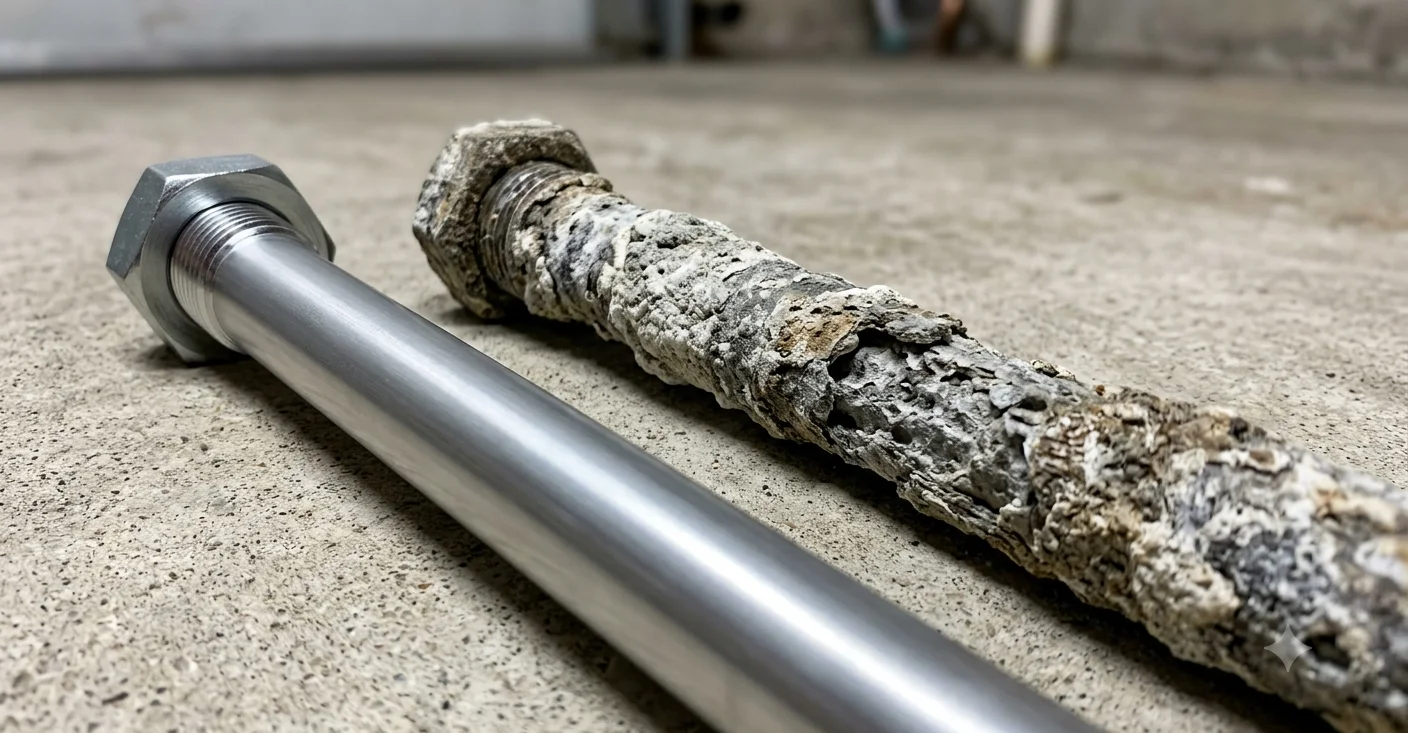
Replacing the magnesium rod with an aluminum-zinc alloy rod usually stops the reaction entirely, since the bacteria don’t react with the alternate metal the same way. This is a straightforward, frequently documented fix on well-water homes. Rod and labor typically run $80 to $200 if you’re paying a plumber, or $20 to $50 in parts if you’re doing it yourself.
Shock Chlorinate the Tank
Flushing the tank with a diluted chlorine bleach solution kills the bacteria causing the reaction. This works, but it’s a temporary fix in most cases. The bacteria usually repopulate within a few months unless you also address the anode rod. Doing both together is what actually holds, rather than treating either one alone. Both of these are targeted fixes; the full range of well water treatment methods and costs covers everything else you might be dealing with beyond this one water heater issue.
Step-by-Step: Replacing the Anode Rod Yourself
- Turn off power (electric) or gas supply to the water heater, and shut off the cold water inlet valve.
- Attach a hose to the tank’s drain valve and release a few gallons of pressure, or fully drain if you’re also flushing sediment.
- Locate the anode rod fitting, usually a hex head on top of the tank, and use a socket wrench (an impact wrench helps if it’s seized) to remove it.
- Check the old rod. Heavy corrosion down to the core wire confirms it’s due for replacement.
- Install the new aluminum-zinc rod, using plumber’s tape on the threads, and tighten securely.
- Restore water supply, power or gas, and run the hot tap until it flows clear before considering the job done.
Why Removing the Rod Entirely Isn’t Recommended
Some homeowners try pulling the anode rod entirely to stop the smell for good. Don’t do this. Without a sacrificial anode, your tank’s steel lining corrodes directly instead, and you’ll cut years off your water heater’s lifespan to solve a smell problem that a $30 rod swap fixes properly.
When to Call a Pro vs. DIY
Anode rod replacement is a solid DIY project if you’re comfortable with basic tools and the rod isn’t seized. If it won’t budge after reasonable force, or if your water heater is old enough that you’re not confident about its other connections holding up to the work, call a plumber rather than risk cracking a fitting on an aging tank.
Check your cold water tap right now. If it smells clean, you’ve got a water heater fix on your hands, not a well problem, and that’s the easier one to solve.