Sediment filters are the cheapest, most overlooked piece of equipment on a well system, and they’re also the first component field diagnostics point to when troubleshooting low pressure. A clogged or wrong-sized sediment filter causes more mystery low-pressure complaints than any other single component. It’s also the first stage in almost every whole house well water filtration system, so getting it right protects everything installed after it.
This article contains affiliate links. We may earn a commission from qualifying purchases at no extra cost to you. Read our full affiliate disclosure.
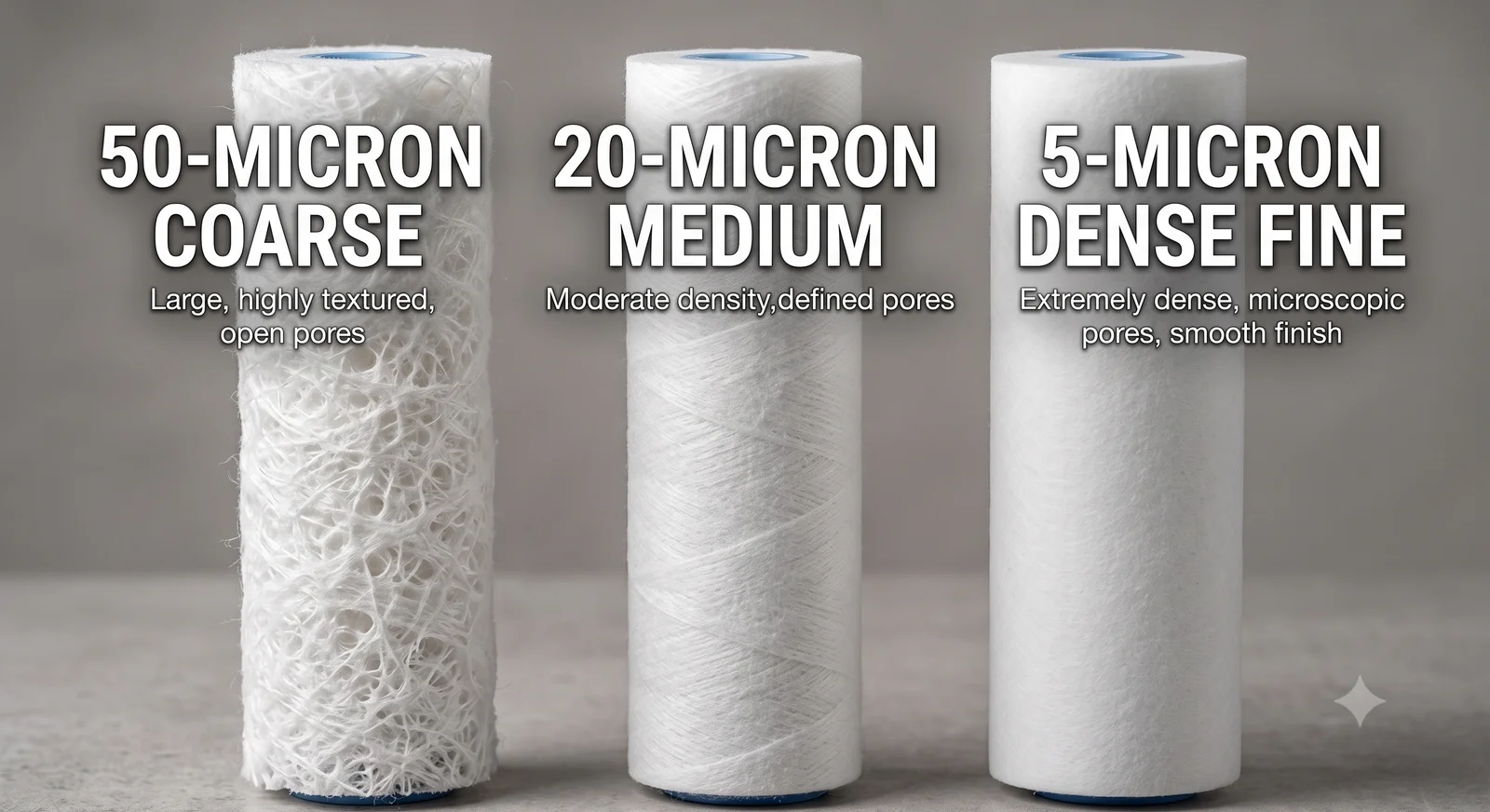
Micron Rating: The Number That Actually Matters
Micron rating tells you the smallest particle size a filter catches. A 5-micron filter catches finer sediment than a 50-micron filter. Lower numbers mean finer filtration, but also faster clogging and more pressure drop. Most wells do best with a two-stage setup: a coarser 20 to 50 micron filter to catch the bulk of the sand and grit, followed by a finer 5 to 10 micron filter to polish what’s left.
Spin-Down vs. Cartridge Filters
Spin-Down Sediment Filters
A spin-down filter uses a reusable mesh screen you flush manually by turning a valve, sending trapped sediment out a small drain port. No replacement cartridges needed, which makes it the top recommendation for wells with heavy sand or grit, since it avoids burning through cartridges weekly. Installed cost runs $150 to $350.
Cartridge Filters
A standard cartridge housing takes a replaceable filter element, usually string-wound or pleated. Cheaper per unit upfront, but you’re buying replacement cartridges every 3 to 6 months. Good option for moderate sediment loads where a spin-down’s coarser filtration isn’t quite fine enough. Installed cost runs $80 to $250 for the housing, plus $10 to $25 per cartridge.
Sizing for Flow Rate, Not Just Pipe Size
A sediment filter has to be rated for your home’s actual peak flow rate. A standard 10-inch cartridge housing handles roughly 8 to 10 GPM before pressure drop becomes noticeable. Bigger households running multiple fixtures at once, or homes with higher-flow fixtures, often need a 20-inch housing or a larger big-blue style unit rated for 15 to 20 GPM instead.
| Household Flow Need | Recommended Housing | Installed Cost |
|---|---|---|
| Under 8 GPM (1 to 3 people) | Standard 10-inch cartridge housing | $150 to $300 |
| 8 to 12 GPM (typical family home) | 20-inch cartridge housing or spin-down | $250 to $450 |
| 12+ GPM (larger household, high fixture count) | Big-blue dual housing or spin-down plus cartridge combo | $400 to $700 |
Signs Your Current Filter Is Undersized or Clogged
- Water pressure that drops noticeably a few days after a fresh cartridge change
- Visible grit settling in toilet tanks or water heater sediment buildup, despite having a filter installed
- A pressure gauge before and after the filter housing showing more than a 10 PSI difference
- Downstream equipment (softener, iron filter) needing service more often than expected
What Housing Material Actually Matters
Clear housings let you see cartridge condition at a glance, which is useful for quick visual checks, but they can degrade faster in direct sunlight or high-iron water that stains the plastic. Opaque housings hold up better long-term in most basement or utility room installs. Either works fine; pick based on whether visual inspection without removing the cartridge matters.
When to Call a Pro vs. DIY
Installing a sediment filter housing on an accessible section of pipe, and swapping cartridges going forward, is one of the most beginner-friendly DIY jobs on a well system. A housing wrench and a spare cartridge on hand are usually all that’s needed to handle this without professional help. It’s one of the easiest items to fold into a monthly maintenance routine. Professional installation is generally worth it only when the main line sits in a tight or hard-to-access spot, or when adding a spin-down unit that needs a new drain line run.
Check your current filter this weekend. If you can’t remember the last time you changed it, that’s probably your answer for why pressure feels a little low.